Shabel Enterprises
Standardizing Enterprise Data Integration in Financial Services
National Mortgage / Financial-Services Firm
Context. A national mortgage and financial-services firm ran its reporting and analytics on a foundation that had grown fragile. Consolidated reporting pulled property and operational data from many different systems; a rotating roster of third-party providers had to be integrated with in-house data, each on its own format and cadence; and much of it was stitched together in one-off, bespoke builds that strained under volume and change. At the same time, the firm was standing up and growing a data-science function that needed clean, dependable, well-understood data to work from. The job was to turn that fragile, fragmented foundation into a standardized, high-performance one — and to make it a base analysts and data scientists could actually build on — while the team and its leadership were themselves in flux.
The Stakes. In mortgage and financial services, decisions about real money ride on data drawn from many systems and many outside providers, and it has to be reconciled quickly and correctly. A brittle, hand-built foundation makes every new source a project and every model only as trustworthy as the data beneath it. Standardizing that foundation — and understanding the data well enough to know which elements actually matter — is what turns raw feeds into something analysts and data scientists can build on with confidence.
The Challenge. Replace a brittle, bespoke integration estate with a standardized, high-performance foundation; consolidate property and operational data from many systems into dependable reporting; give a growing data-science function clean, model-ready data and informed guidance; and bring order and delivery discipline to the team — without dropping quality.
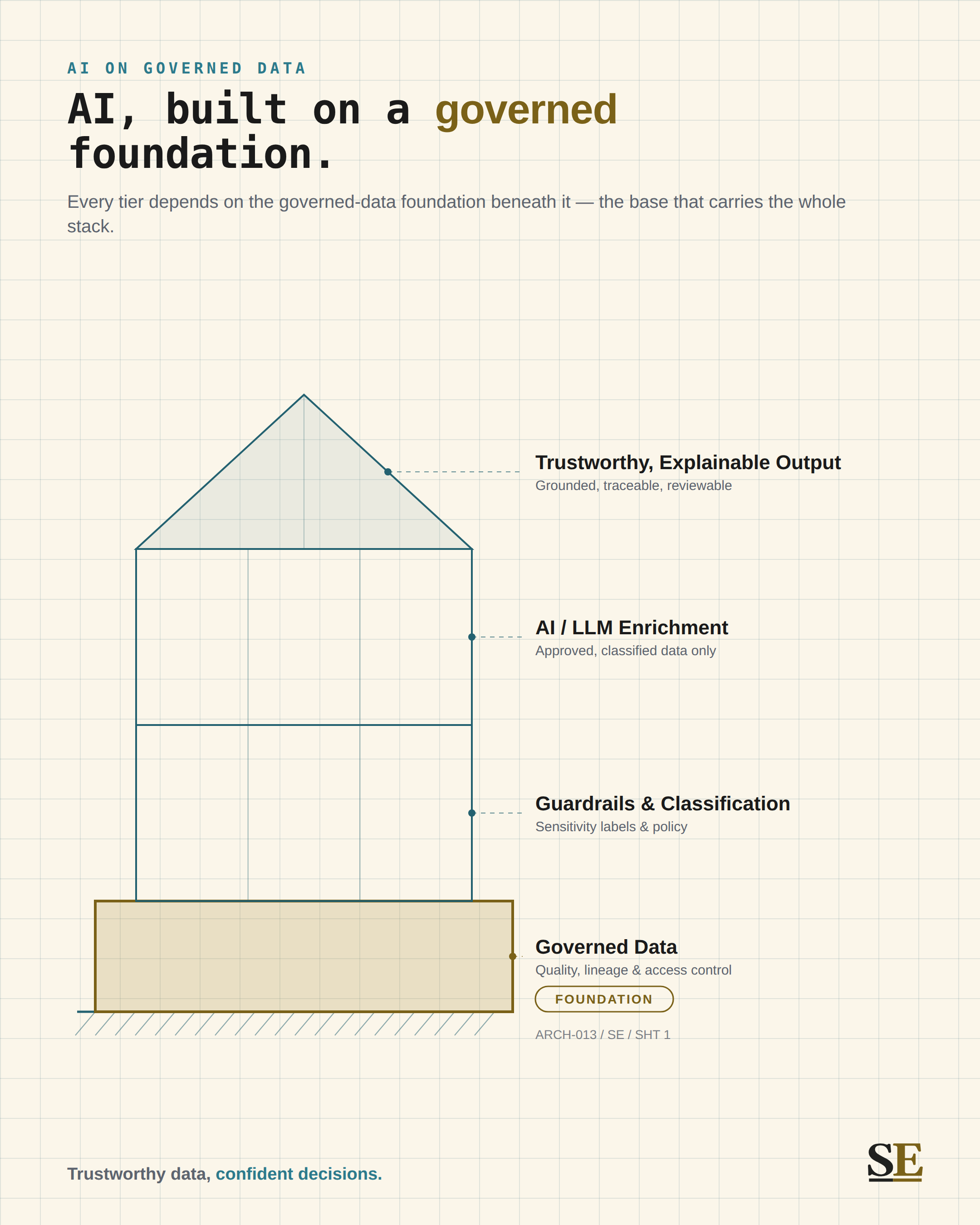
Our Approach.
- Standardized the foundation. Analyzed the existing architectures and moved to standardized design-and-modeling frameworks, replaced brittle one-off integrations with lean, high-throughput bulk processing, and designed swappable interface pipelines so third-party providers could be integrated — and exchanged — as routine rather than as projects.
- Consolidated the reporting. Brought property and operational data from many disparate systems into a consolidated, dependable reporting foundation, engineered to stay fast and reliable as data volumes grew.
- Enabled — and advised — the data science team. Gave a growing data-science group the clean, well-governed, model-ready data it needed, and joined the model-design work as a partner: advising on algorithm selection, identifying the critical data elements and KPIs that mattered most, and guiding how variables should be weighted.
- Brought delivery discipline. Led the team into a genuine Agile cadence — running it as Scrum Master and project manager and enforcing the ceremonies — and stood up a DevOps review process, so delivery became predictable and reviewed rather than ad hoc.
- Grew the team and modernized. Trained the engineers who joined, retained history with slowly-changing-dimension design, and helped move the platform toward a modern cloud data warehouse.
The Outcome. A standardized, high-performance data foundation that integrated third-party sources as routine, consolidated fragmented property and operational data into dependable reporting, and gave a growing data-science function the clean, model-ready data it needed — delivered on a real Agile-and-DevOps cadence.
A partner to the data-science work, not just a pipe into it. The standardized foundation did more than move data efficiently: it became the clean, model-ready base a growing data-science team relied on — and we were in the model-design room ourselves — on algorithm selection, the critical data elements and KPIs that mattered, and how variables should be weighted. Analytics were consolidated onto a single engine and the platform moved toward a modern cloud data warehouse — all on a disciplined Agile-and-DevOps cadence.
What It Demonstrates. A data engineer who can build the foundation and sit at the data-science table. We turned a brittle, fragmented estate into a standardized, high-performance base for analytics and modeling, brought real Agile and DevOps discipline to how it ships, and stayed the dependable constant while the organization around it changed.
Capabilities. Enterprise data-integration standards · third-party data integration · data consolidation & reporting · SQL performance engineering · data-science enablement & model-design partnership · Agile / Scrum & DevOps leadership · slowly-changing-dimension history · team training · cloud-warehouse modernization.
← All Case Studies · ← Previous: Automating Delivery for a Regulated Utility · Next: Accelerating Electronic Health Record Integration
Work With Us
Want a data foundation your analysts and data scientists can actually build on? Let’s talk.
Contact Us →